How to Choose Senior Living Reputation Management Software: A 2026 Checklist, Strategies and Costs for Senior Living Operators
Choosing senior living reputation management software comes down to one test: will it help you see, answer and improve what families read about you online, in the places they actually look? I run Senior Living Mastery and built Census Mastery because the reputation tools I tried were made for dentists and car dealers, not for a daughter choosing memory care for her mom.
This guide is the buyer's checklist: what to ask, what to avoid and what it costs. If you want the short version of what our own tool does, see our senior living reputation management page. Facts were checked October 21, 2026.
What senior living reputation management software and online reputation management actually do
Senior living reputation management is the work of monitoring, answering and improving what families see about your community online: Google reviews, senior care directories, social media, search results and AI answers. Software makes that work faster. It pulls every review into one place, flags the negative review that needs a reply, and tracks your online presence against competitors.
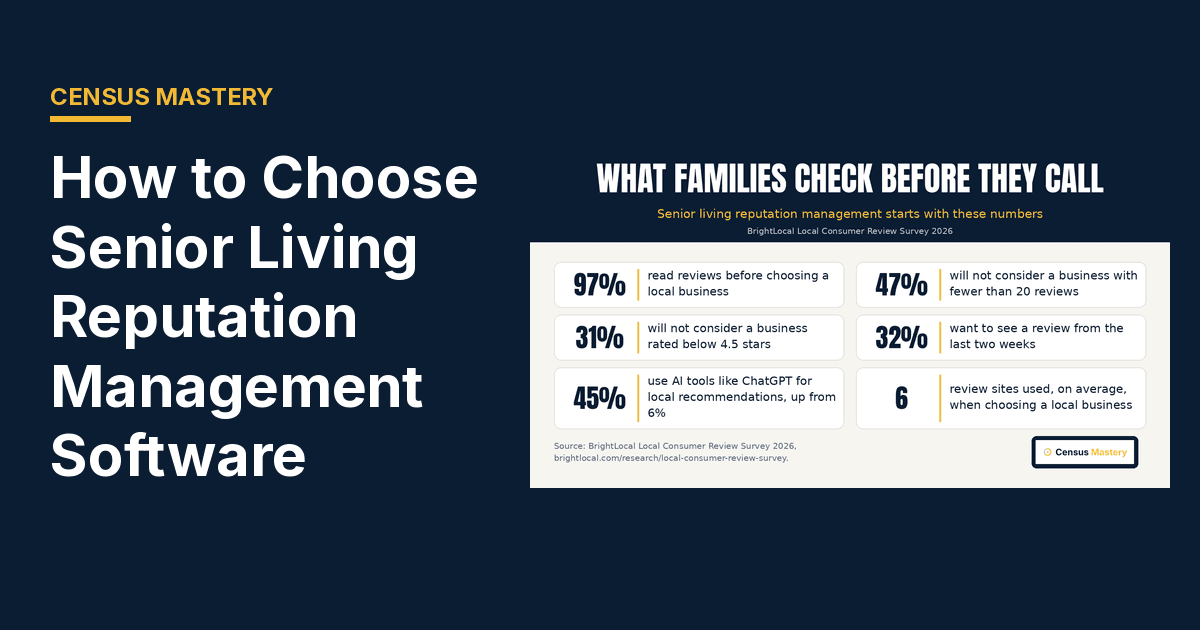
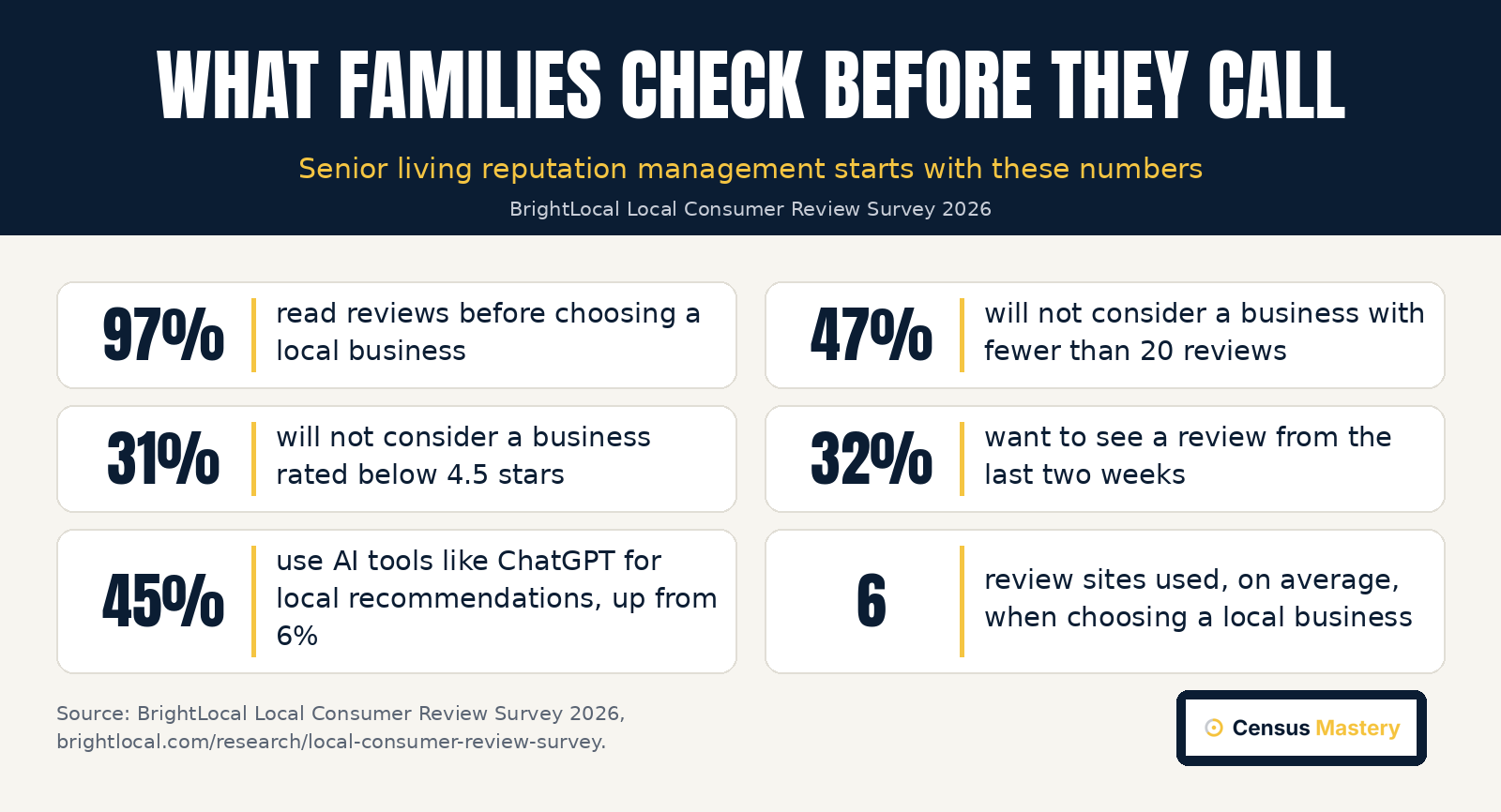
Families researching senior living options do their homework before they call, and many rely on online reviews more than any brochure. In the BrightLocal Local Consumer Review Survey 2026, 97 percent of consumers read reviews, 31 percent will not consider a business rated below 4.5 stars, 47 percent will not consider one with fewer than 20 reviews, and the average consumer uses 6 review sites.
For senior living facilities, those sites include Google, Caring.com, A Place for Mom, Seniorly and SeniorAdvisor. A strong reputation on all of them is what turns a search into a tour. Senior living reviews on these sites shape your brand reputation long before a potential resident walks in.
Why the right reputation management is vital for senior living communities and senior care
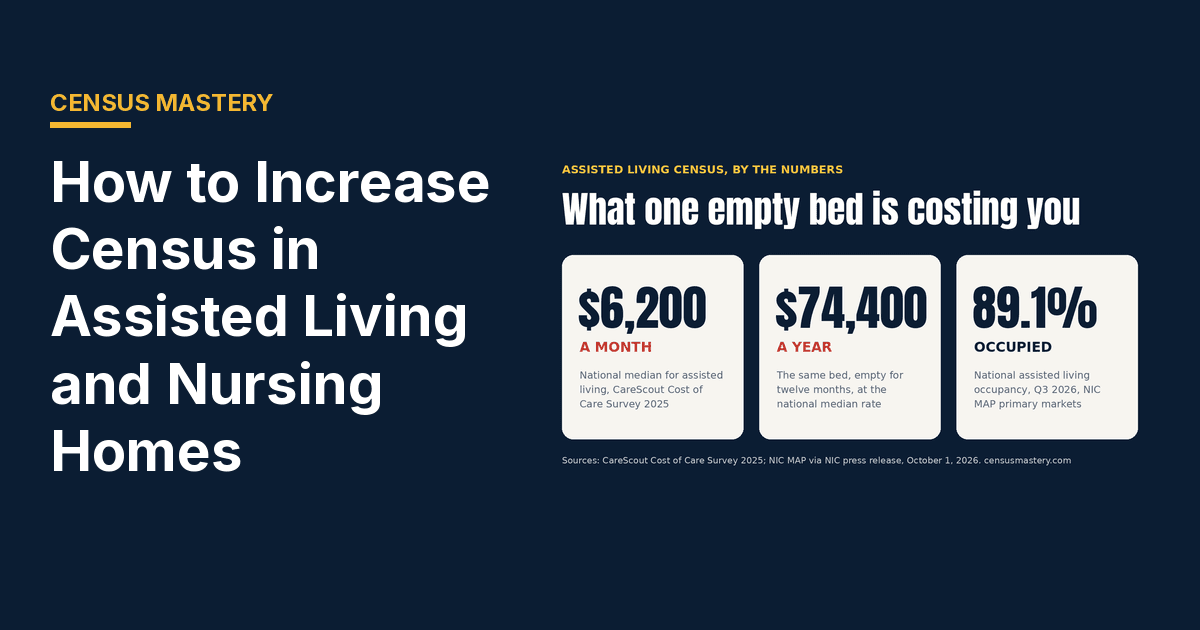
Reputation is vital for senior living because the decision is emotional, expensive and made fast. The national median for assisted living is $6,200 a month per the CareScout Cost of Care Survey 2025. A family spending that much reads everything. A facility's reputation online often decides which three communities get a tour.
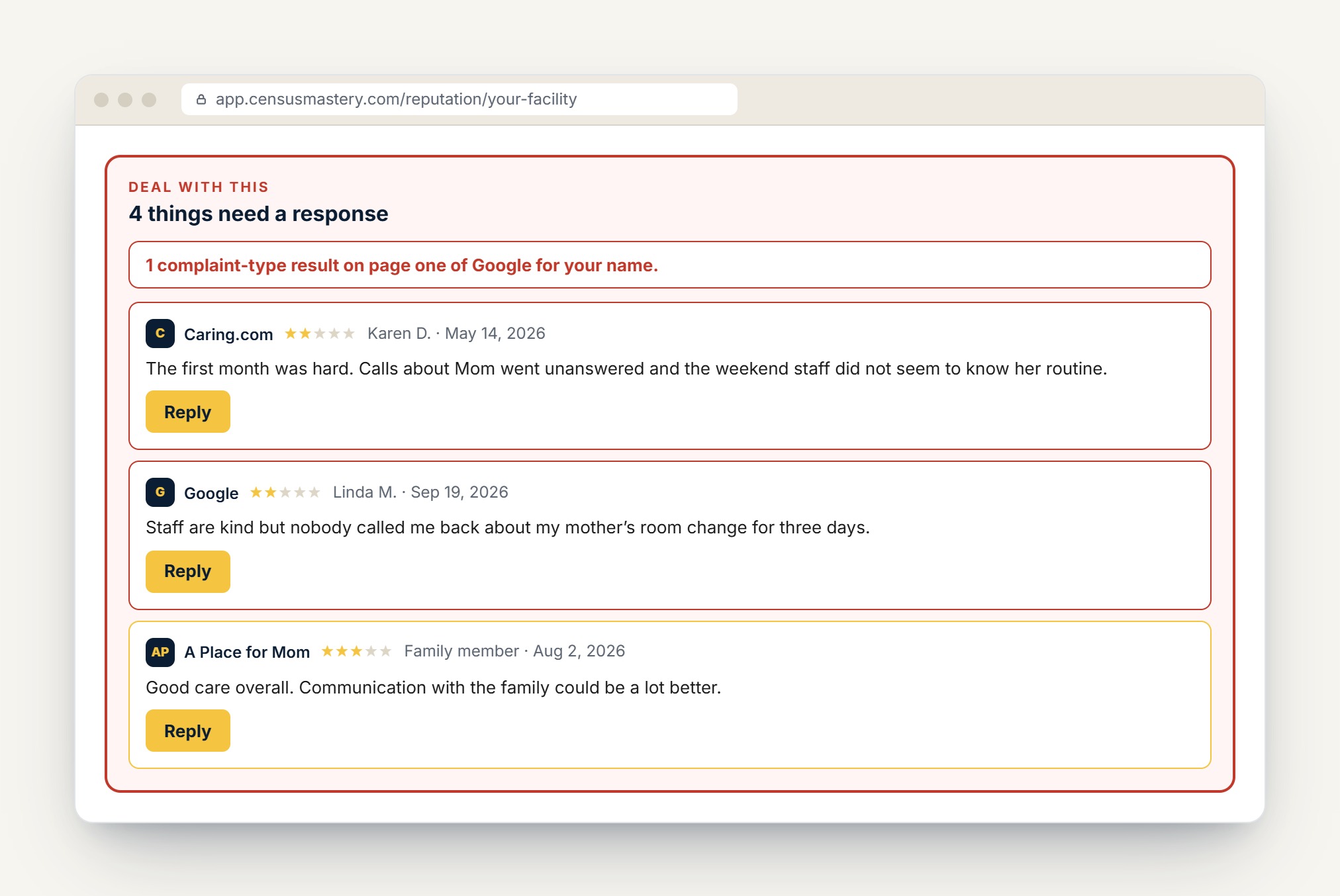
Reputation management for senior living is also different from the rest of the senior care industry and from other businesses. Reviews come from residents and their families, from former staff and from people who toured once. Replies carry privacy risk, because you cannot confirm that someone is or was a resident. And one viral complaint can stall move-ins for months.
The upside is real too. A positive reputation reflects resident satisfaction and the senior living experience you already deliver. Positive reviews, a fresh review in the last two weeks and fast replies build credibility. BrightLocal found 32 percent of consumers want a review from the last two weeks and 19 percent expect a reply the same day.
How to choose: what senior living communities need from a reputation tool, from visibility to Google Business Profile and replies
A good tool for senior living does six things: it monitors reviews on every site, tracks your listings, helps you reply safely, asks every family for a review, compares you with competitors and shows your visibility in Google and AI search. The best tools add a clear score so you know where you stand.
- Review monitoring. Every new review across Google, Facebook, Yelp and senior living directories.
- Listing audit. Missing, unclaimed or wrong listings that cost you calls.
- Response management. Drafted replies you approve, with privacy-safe wording.
- Review requests. Text and email links so more families share honest feedback.
- Competitor benchmarking. Your rating and review count next to the communities families also call.
- Search and AI visibility. Where you rank on Google Maps and whether ChatGPT or Gemini mention you.
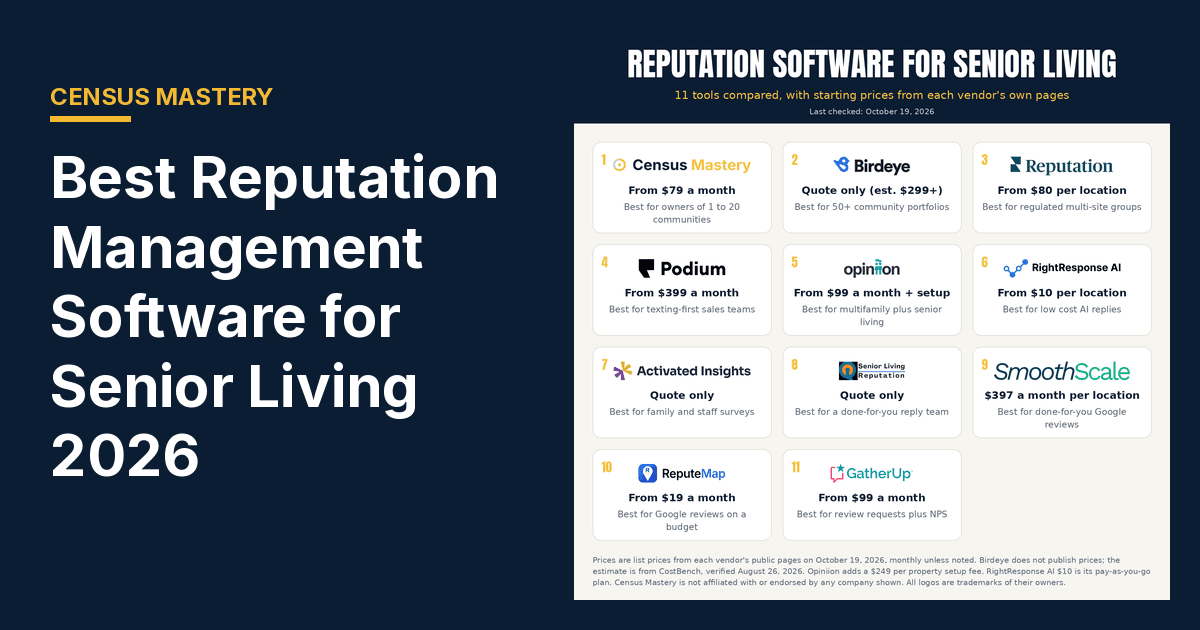
This is the workflow behind every strong online reputation and every proactive reputation management strategy. Monitoring online reviews in one place is the first step; generating positive reviews is the second. Our best reputation management software for senior living roundup compares 11 platforms on these jobs.
Reputation management strategies for managing your senior living online reputation in 2026
The reputation management strategies that work are simple and steady: ask every family for a review, reply to every review within a day, fix every listing, and watch your competitors. Do these each month and your rating, review count and search rankings move together. Skip them and even a great community looks tired online.
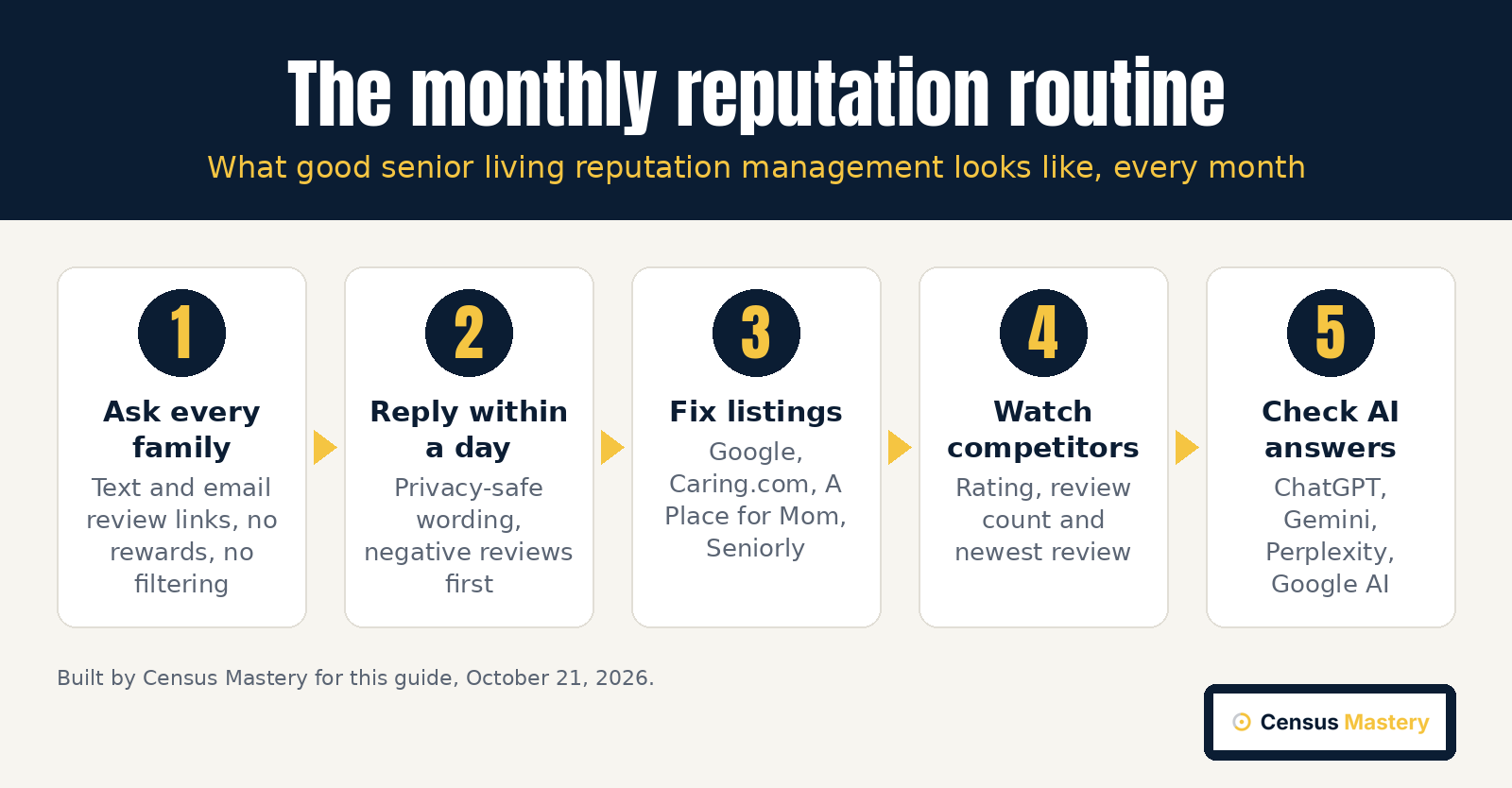
- Ask every family on social media platforms and in person. Google's rules say ask everyone, with no rewards and no filtering. Never ask only happy families.
- Keep your newest review under 30 days old. Recency is one of the first things families notice.
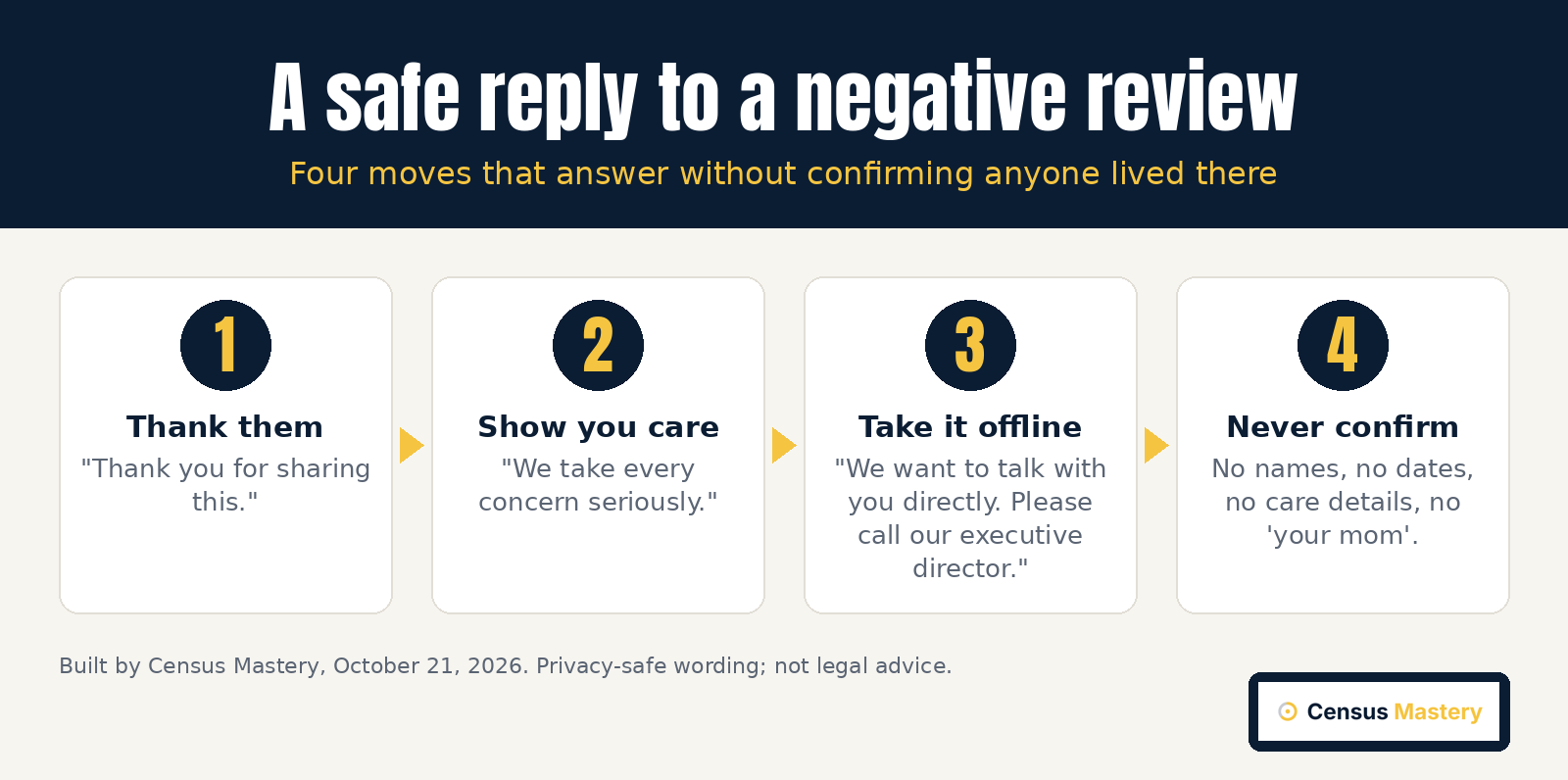
- Reply to the negative review first. Thank them, take it offline, and never confirm residency.
- Fix your Google Business Profile. Hours, photos, categories and posts. It feeds local search and SEO.
- Claim your directory listings. Especially Caring.com and A Place for Mom, where families compare senior living options.
- Check AI answers. BrightLocal found 45 percent of consumers now use AI tools for local recommendations, up from 6 percent.
A safe reply to a negative review looks like this: "Thank you for sharing this. We take every concern seriously and want to talk with you directly. Please call our executive director at the number on our website." It answers without confirming anyone lived there.
Software vs a reputation management partner: options for senior living providers
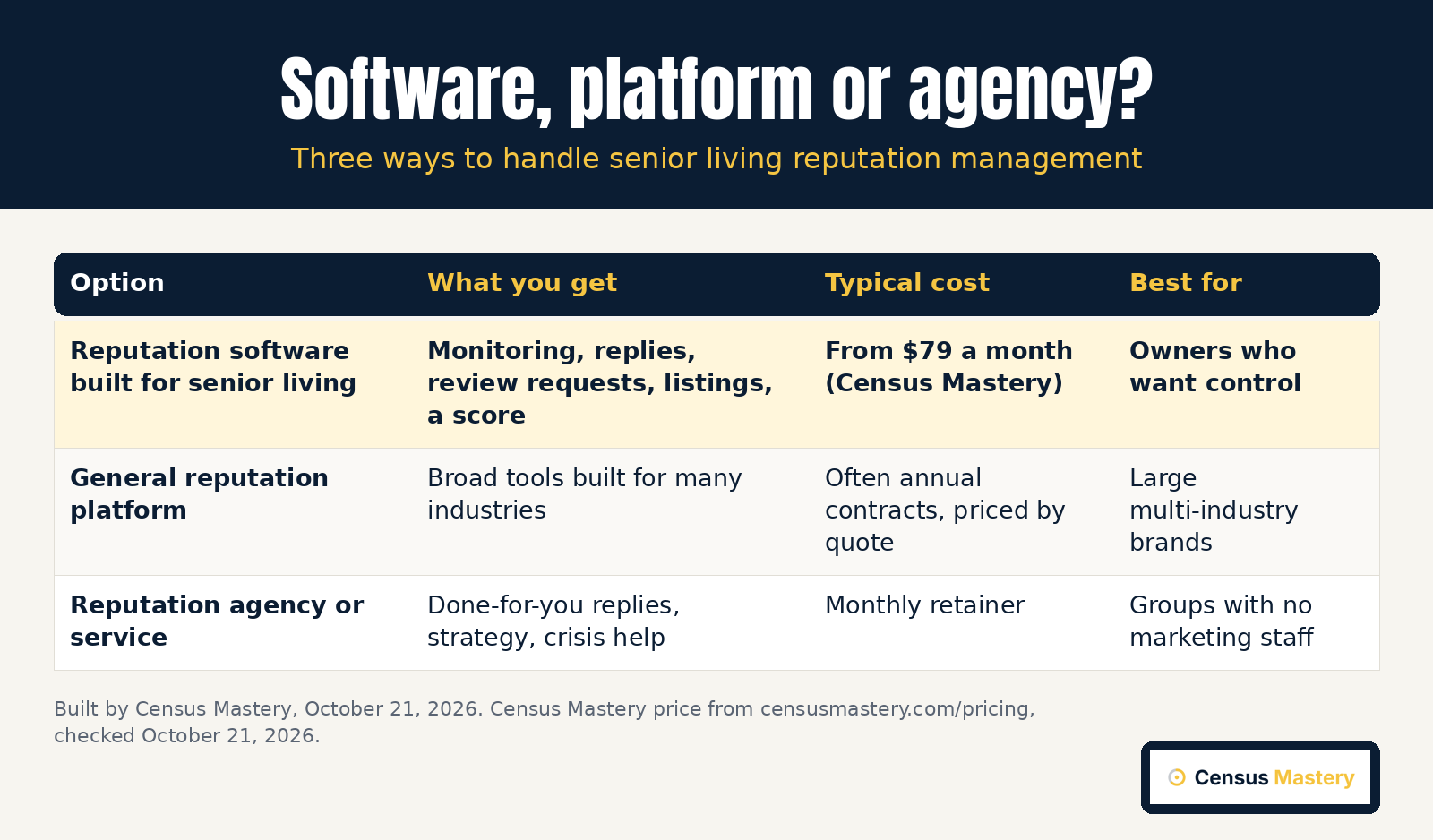
Software platforms give you the tools and data; reputation management companies and marketing agencies do the work for you. Software costs less and keeps you in control. An agency or reputation management partner costs more but adds people. Many senior living providers start with software, then add a digital marketing partner when they grow.
| Option | What you get | Typical cost | Best for |
|---|---|---|---|
| Reputation software built for senior living | Monitoring, replies, requests, listings, score | From $79 a month (Census Mastery) | Owners who want control |
| General reputation management platform | Broad tools for many industries | Often annual contracts | Large multi-industry brands |
| Reputation management services or agency | Done-for-you replies, strategy, crisis management | Monthly retainer | Groups without marketing staff |
Senior Living Mastery is our agency side, with services offered from strategy to crisis management. Census Mastery is the software side. Traditional reputation agencies serve every industry; property management systems and experience management suites do much more than reviews. Both are built only for senior living, so the language, directories and privacy rules match your world.
What to look for in the best senior living reputation management software
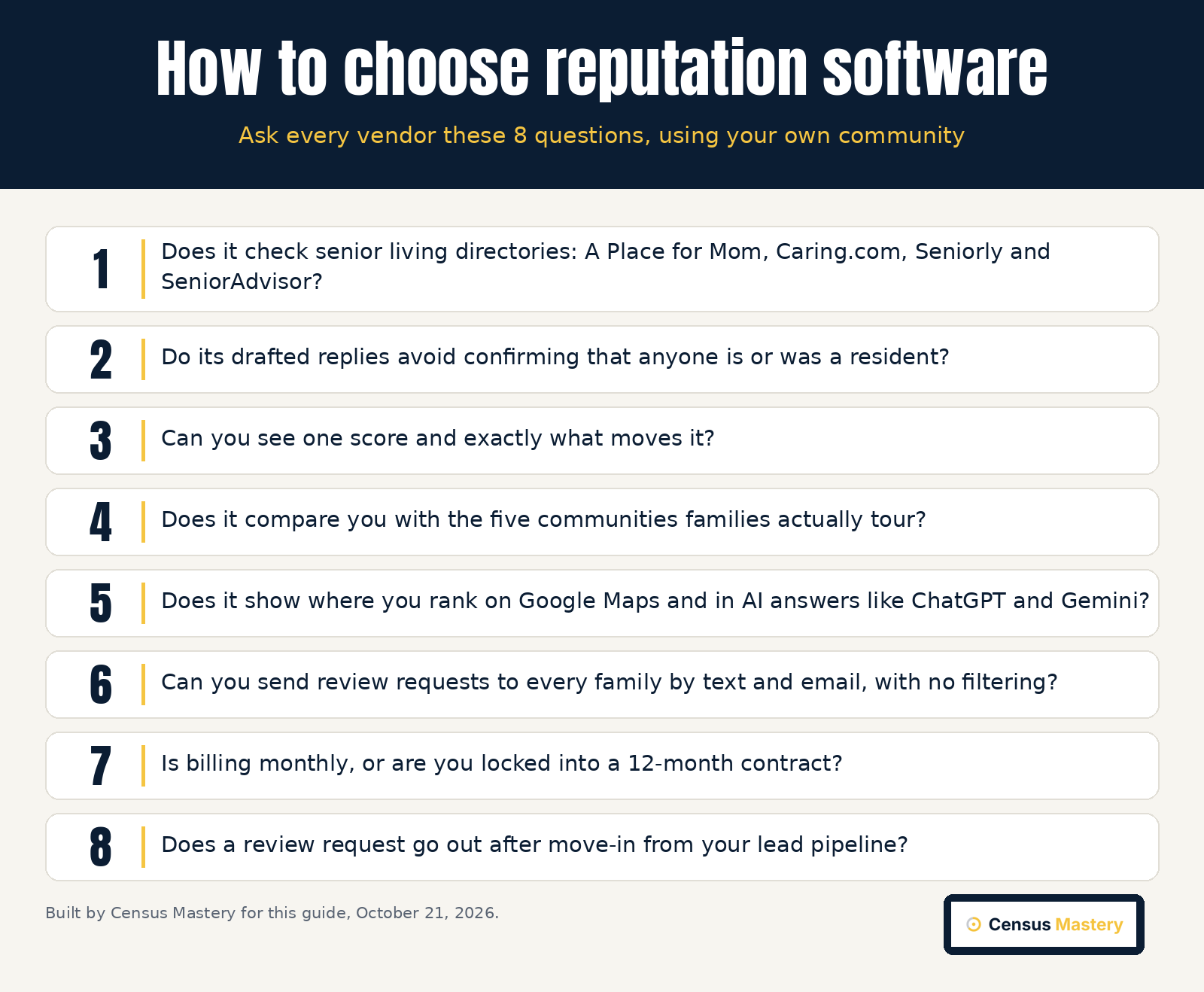
The best tool is built specifically for senior living, audits senior care directories, writes privacy-safe replies, compares you with real local competitors, tracks AI search and costs less than one empty room. Ask every vendor for a demo with your own community, not sample data.
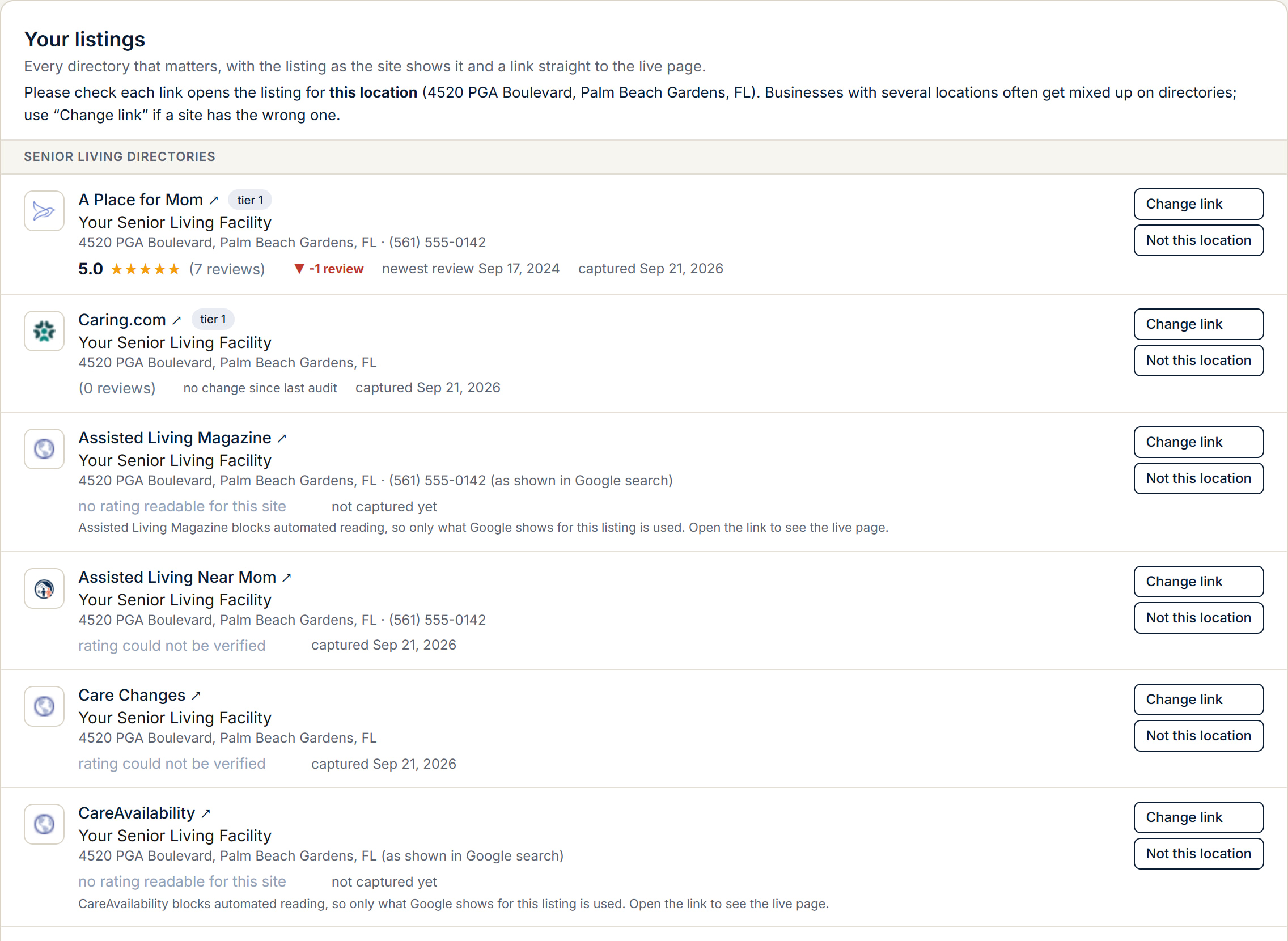
- Senior living directories. Does it check A Place for Mom, Caring.com, Seniorly and SeniorAdvisor?
- Safe replies. Does it avoid confirming residency?
- A real score. Can you see one number and what moves it?
- Competitors. Does it pick the five communities families actually compare?
- Monthly billing. Can you cancel without a year-long contract?
- Ties to sales. Does a review request go out after move-in from your senior living CRM or pipeline?
If you also need sales software, read our assisted living CRM software guide and the senior living CRM guide, or see the senior living CRM built into Census Mastery.
How Census Mastery handles senior living reputation management
Census Mastery handles senior living reputation management as senior care-specific software for assisted living facilities, memory care, independent living, nursing homes and in-home care. It gives each community a Census Score out of 100 from seven measures, audits 150 plus directories, compares you with five competitors and hands you three plays for the month.
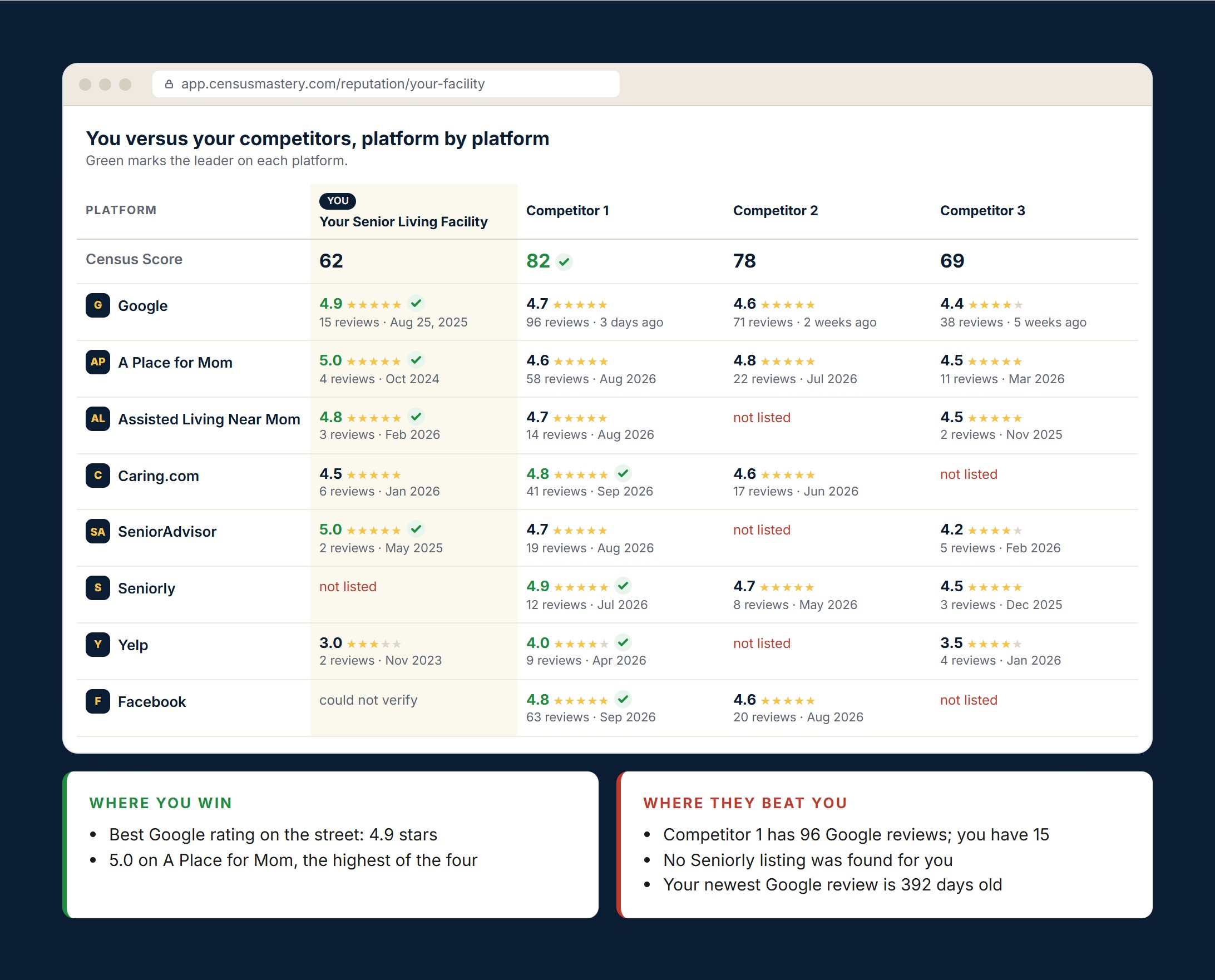
Every plan includes review monitoring, a reviews inbox, map rank tracking and Google Business Profile tools. Full Census, $147 a month for up to three communities, adds HIPAA-compliant AI-written replies, review requests by text and email, family surveys and AI search visibility across six engines. See senior living review software, AI review replies and Census Mastery pricing.
Census Mastery does not have a unified messaging inbox, webchat, payments or a phone system, and it does not syndicate listings. If you need those, a broader platform fits better. If you want a plain-English tour of the whole loop, see how Census Mastery works.
How reputation drives occupancy, leads and senior living marketing
Reputation drives census because it decides who calls. A family that sees 4.8 stars and a review from last week calls you. A family that sees 4.1 stars and a year-old review calls the next community. Better reviews raise inquiries, and more inquiries fill beds. That is the link most marketing plans miss.
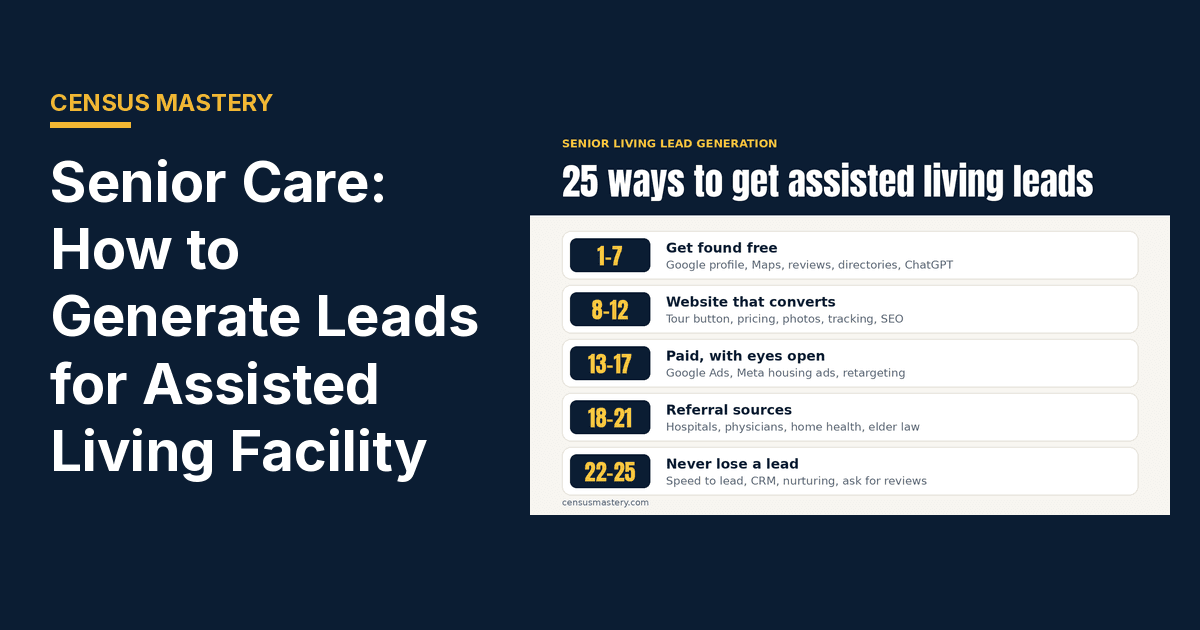
National assisted living occupancy was 89.1 percent in the third quarter of 2026, per the NIC release of October 1, 2026. When the market is that full, a low census is usually local. Read how to increase census in assisted living, how to generate leads for an assisted living facility and our guide to census management software.
Reputation is one part of a full plan. Our step-by-step guide on how to market an assisted living facility shows where it fits next to your website, ads and referral sources.
Frequently asked questions
These are the questions senior living owners ask most about reputation management. Statistics come from the BrightLocal Local Consumer Review Survey 2026, CareScout 2025 and NIC MAP. Census Mastery prices come from our pricing page, checked October 20, 2026. Ask any vendor for written terms before you sign.
What is the best software for reputation management?
For senior living, the best software is built for senior living: it audits senior care directories, writes privacy-safe replies and tracks your local competitors. General tools serve many industries. Compare options in our best reputation management software for senior living guide, then Census Mastery vs Birdeye, Census Mastery vs Podium, Census Mastery vs Reputation.com, Census Mastery vs NiceJob, Census Mastery vs Yext and Census Mastery vs BrightLocal.
What is the main difference between SEO and ORM?
SEO, or search engine optimization, helps your website rank in search. Online reputation management (ORM) shapes what people find and read about you: reviews, listings and page-one results. They overlap, because reviews and your Google Business Profile affect local search rank.
How much does senior living reputation management software cost?
Census Mastery costs $79, $147 or $297 a month, billed monthly with no contracts. Many general platforms do not publish prices and sell annual contracts. Agencies charge a monthly retainer for done-for-you services.
How should senior living facilities respond to negative reviews?
Reply within a day, thank the reviewer, take the conversation offline and never confirm that someone is or was a resident. Then fix the issue if it is real. A calm, fast reply shows future families how you handle problems.
The bottom line
Your reputation is the first tour a family takes, and it happens without you. The reputation of the community is built in every review, listing and reply. Effective reputation management lets you see that tour, fix what is wrong and earn the reviews you deserve, so every senior care facility looks as good online as in person.
Census Mastery comes with a guarantee. We guarantee a move-in. See the guarantee, then get your free Census Score on a 20-minute call and see how you compare with five competitors.